
Monday, 31 July 2006
Away for a few days ...
... although as I've been posting so infrequently of late it probably makes little real difference I suppose. However, I shall be staying in an hotel whose website promises it has wi-fi access throughout so as I've not yet used my laptop on wi-fi away from home I'm going to take it and give it a whirl. The trip, however, is not for frivolous purposes - it is to attend the funeral of an elderly aunt who died, sadly, last Friday. She had been quite ill for a number of years and the last 18 months have been particularly difficult, because of her deteriorating health, both for her and my uncle, so with the sadness at her passing comes the realisation that at least her suffering is now over. And at least I shall be meeting with various family members I see only rarely because of the distances we mainly all live from each other. I'll be back later in the week.
Sunday, 30 July 2006
Not pure as the driven snow ...
... well I knew that already, ho ho!
(thru Bill at Tottyland)
| You Are 22% Evil |
 A bit of evil lurks in your heart, but you hide it well. In some ways, you are the most dangerous kind of evil. |
(thru Bill at Tottyland)
Thursday, 27 July 2006
Libertarianism - "A Burst of Freedom"
The first of two programmes on the brand of libertarianism which became popular amongst some Conservative-leaning students in the 1980s was broadcast yesterday evening on BBC Radio4 in the 15-minute slot before the 9pm news, after this week's 'Moral Maze' programme.
The programme, entitled "A Burst of Freedom", discussed in the first episode some of the radical policies that were proposed, whereas next week's programme (BBC Radio4 - 8.45 to 9pm, Wednesday 2nd August) will discuss how the insatiable desire to shock and irritate senior figures in the [Conservative] Party led to the radicals' downfall (according to the billing in Radio Times). You can listen to last evening's programme, if you missed it, by clicking on the link available here, from where you will also be able to get a link to next week's broadcast, after it has been transmitted.
As someone who still describes himself as a 'Conservative Libertarian' (read toward the end of my 'Who is Bill Cameron?' page by clicking here) I was especially interested to hear the programme. I would say the first programme was really quite balanced and I await eagerly the final programme next week. Of course I never shared some of the extreme ('wacky') ideas prevalent, although in all honesty I did (and do) support quite a lot of what was proposed and think that today's Conservative Party could benefit from re-examining, and adopting, at least some of those ideas.
The programme, entitled "A Burst of Freedom", discussed in the first episode some of the radical policies that were proposed, whereas next week's programme (BBC Radio4 - 8.45 to 9pm, Wednesday 2nd August) will discuss how the insatiable desire to shock and irritate senior figures in the [Conservative] Party led to the radicals' downfall (according to the billing in Radio Times). You can listen to last evening's programme, if you missed it, by clicking on the link available here, from where you will also be able to get a link to next week's broadcast, after it has been transmitted.
As someone who still describes himself as a 'Conservative Libertarian' (read toward the end of my 'Who is Bill Cameron?' page by clicking here) I was especially interested to hear the programme. I would say the first programme was really quite balanced and I await eagerly the final programme next week. Of course I never shared some of the extreme ('wacky') ideas prevalent, although in all honesty I did (and do) support quite a lot of what was proposed and think that today's Conservative Party could benefit from re-examining, and adopting, at least some of those ideas.
Wednesday, 26 July 2006
More nannying propaganda from Blair - on the NHS
The man really doesn't 'get it'! He wants to solve the problems of the NHS by exhorting people to take better care of themselves. A laudable desire, to be sure, although he must be even more out of touch with reality than I already belive him to be if he thinks that your average fag-puffing, beer-swilling, junk-food guzzling lout is going to take a blind bit of notice of this latest plea for everyone 'just to be nice to each other'. God, it makes me sick, this nannying hectoring attitude that socialists adopt, whether they are of the champagne or working-men's club variety.
The job of a government is to set up conditions which motivate citizens to act in their own best interests, not to provide a molly-coddled environment which people come to rely on as the norm and as a result too often lose the initiative to help themselves. The NHS does need reform, yes. It requires drastic reform and a lessening of the bureaucracy which forms an integral part of its whole ethos. The NHS, or any health service, should exist solely to provide healthcare outcomes for patients, not job opportunities for well in excess of a million people. Market-based reality needs to be injected into this monolith!
The job of a government is to set up conditions which motivate citizens to act in their own best interests, not to provide a molly-coddled environment which people come to rely on as the norm and as a result too often lose the initiative to help themselves. The NHS does need reform, yes. It requires drastic reform and a lessening of the bureaucracy which forms an integral part of its whole ethos. The NHS, or any health service, should exist solely to provide healthcare outcomes for patients, not job opportunities for well in excess of a million people. Market-based reality needs to be injected into this monolith!
Monday, 24 July 2006
The NHS - a curse or a blessing
Yesterday evening the 'Panorama' strand on BBC1 explored the 'unlawful' compulsion of elderly people to sell their homes to pay for NHS care. I am not a lawyer so I have no idea whether the use of the word 'unlawful' is mere hyperbole to reinforce the message of the programme-makers or whether it is literal truth. In any case this is not in any way what my post is about.
The contention of the programme, and a similar programme broadcast several months ago, is that an artificial distinction is being drawn between care necessary to treat a medical condition and the continuing care very often necessary because of the infirmities that come with age. The former is 'funded' (in the arcane terminology of the NHS), whereas the latter's funding is subject to a 'means test' before the State agrees to pay. What this means in practice is that those who have substantial personal assets are required to pay for their own continuing care, whereas those who do not have such assets have their continuing care paid for by the State. In the 50 years since the creation of the NHS, average longevity has increased substantially and medical treatment has advanced so much that many more people are able to be treated for medical conditions which would formerly have resulted in death so that more people continue to live for many years after they are able to take care of their own physical needs because they have become physically or mentally infirm through age. Unsurprisingly this costs a great deal of money. Equally unsurprisingly this has put severe strains on NHS budgets so that, over the years, the definitions of what is and what is not 'medical' treatment have been narrowed so that 'sparse' resources may be targetted at those whose own financial resources are meagre, simply because of the increasing numbers of people who live on long after they have become economically inactive (i.e. have retired).
The way in which the NHS was set-up, and 'sold' to the British people, was that the State would take care of them from 'the cradle to the grave' - classic socialist philosophy. The crux of the criticism of those who think that the NHS is delinquent in refusing to meet the costs of continuing care for all who require it, irrespective of their own financial circumstances, is that a 'pact' between the State and the citizen has been broken.
All the mainstream British political parties have promised the electorate that a vote for them would result in this basic promise being adhered to. Most political parties which have any serious chance of winning an election have, nevertheless, simultaneously promised that taxes will not rise. The one reasonably important political party which has said it would raise taxes to meet specific outlays has, so far at least, been remarkably unsuccessful at elections. In reality whilst opinion polls indicate regularly that people would be prepared to pay more in tax to fund an improvement in specific services, too few are prepared to vote for this at an election.
Over the past 15 or 20 years, and indeed particularly over the past nine years of this Government, younger people have been encouraged to plan earlier for their own retirement with the not so implicit, but not exactly explicit either, message that the State was no longer able to provide in the same way it had always promised to in the past. However, the political rhetoric has remained exactly the same - the NHS (for example) will remain 'free at the point of use'. The problem is that all State provided services are not paid for out of income generated from earlier taxation, but from current taxation. Citizens over 40, who had always been promised that the State would look after them from 'cradle to grave' are now faced with the unpalatable reality that the State is now seeking to distance itself from such promises - although it is actuarily far too late for those affected to do much about it if they have not been prudent in earlier years to accumulate enough of their own resources to fund their own old age, post-retirement. Naturally the Government Health Minister who appeared in last night's programme struggled to disguise this, but few who watched the programme would have been fooled for one second about the truth.
Governments of all stripes during my lifetime have connived at this subterfuge, the prize being the votes of a gullible electorate. It would be far better, as I have opined in this blog a number of times previously, for political parties to start telling the truth to the British people - largely taxation-funded medical care for all sectors of the population and the continuing care of the elderly and others who require it is unsustainable at the levels of taxation which the public seems willing to tolerate. We should move as rapidly as possible either to individually-funded medical and continuing care for as many people as possible; I have no strong views about how this should best be accomplished although it seems probable that insurance-based solutions, not directly State-managed, are the most viable way forward. Those who have not had the prudence to plan for their own futures should be told, pretty bluntly, that the consequences of their actions will have to be borne by them and they alone. I believe that the vast majority of people would be motivated into taking measures themselves to protect their own futures if these stark choices were honestly explained to people. Naturally all this would involve a significant reduction in overall levels of taxation, because the State would be promising a great deal less, in terms of services, for its citizens. I do not shrink from acknowledging that there is likely always to be a small percentage of the population which is unable to provide for itself and I would not myself advocate a completely laissez-faire policy, but I do believe that the safety-net available should be set a very great deal higher than it is currently.
To come back to some of the practical issues raised by last evening's programme, however, it is clear that the strongest objections to the elderly liquidating their own major assets, usually a dwelling, to help fund their own later years, comes from the children, allegedly endeavouring to protect the interests of their elderly parents, but in reality attempting to protect the assets they hope to inherit when a parent dies. I can really see no good reason why the State should continue to pay for the continuing care of people who require it when they have property assets which they no longer require for themselves and which could readily be liquidated to meet much of the cost over many years, solely for the purpose of providing children with a very significant inheritance. It really is that simple and it is about time that at least one of the major political parties, for example the Conservative Party, began to say so.
The contention of the programme, and a similar programme broadcast several months ago, is that an artificial distinction is being drawn between care necessary to treat a medical condition and the continuing care very often necessary because of the infirmities that come with age. The former is 'funded' (in the arcane terminology of the NHS), whereas the latter's funding is subject to a 'means test' before the State agrees to pay. What this means in practice is that those who have substantial personal assets are required to pay for their own continuing care, whereas those who do not have such assets have their continuing care paid for by the State. In the 50 years since the creation of the NHS, average longevity has increased substantially and medical treatment has advanced so much that many more people are able to be treated for medical conditions which would formerly have resulted in death so that more people continue to live for many years after they are able to take care of their own physical needs because they have become physically or mentally infirm through age. Unsurprisingly this costs a great deal of money. Equally unsurprisingly this has put severe strains on NHS budgets so that, over the years, the definitions of what is and what is not 'medical' treatment have been narrowed so that 'sparse' resources may be targetted at those whose own financial resources are meagre, simply because of the increasing numbers of people who live on long after they have become economically inactive (i.e. have retired).
The way in which the NHS was set-up, and 'sold' to the British people, was that the State would take care of them from 'the cradle to the grave' - classic socialist philosophy. The crux of the criticism of those who think that the NHS is delinquent in refusing to meet the costs of continuing care for all who require it, irrespective of their own financial circumstances, is that a 'pact' between the State and the citizen has been broken.
All the mainstream British political parties have promised the electorate that a vote for them would result in this basic promise being adhered to. Most political parties which have any serious chance of winning an election have, nevertheless, simultaneously promised that taxes will not rise. The one reasonably important political party which has said it would raise taxes to meet specific outlays has, so far at least, been remarkably unsuccessful at elections. In reality whilst opinion polls indicate regularly that people would be prepared to pay more in tax to fund an improvement in specific services, too few are prepared to vote for this at an election.
Over the past 15 or 20 years, and indeed particularly over the past nine years of this Government, younger people have been encouraged to plan earlier for their own retirement with the not so implicit, but not exactly explicit either, message that the State was no longer able to provide in the same way it had always promised to in the past. However, the political rhetoric has remained exactly the same - the NHS (for example) will remain 'free at the point of use'. The problem is that all State provided services are not paid for out of income generated from earlier taxation, but from current taxation. Citizens over 40, who had always been promised that the State would look after them from 'cradle to grave' are now faced with the unpalatable reality that the State is now seeking to distance itself from such promises - although it is actuarily far too late for those affected to do much about it if they have not been prudent in earlier years to accumulate enough of their own resources to fund their own old age, post-retirement. Naturally the Government Health Minister who appeared in last night's programme struggled to disguise this, but few who watched the programme would have been fooled for one second about the truth.
Governments of all stripes during my lifetime have connived at this subterfuge, the prize being the votes of a gullible electorate. It would be far better, as I have opined in this blog a number of times previously, for political parties to start telling the truth to the British people - largely taxation-funded medical care for all sectors of the population and the continuing care of the elderly and others who require it is unsustainable at the levels of taxation which the public seems willing to tolerate. We should move as rapidly as possible either to individually-funded medical and continuing care for as many people as possible; I have no strong views about how this should best be accomplished although it seems probable that insurance-based solutions, not directly State-managed, are the most viable way forward. Those who have not had the prudence to plan for their own futures should be told, pretty bluntly, that the consequences of their actions will have to be borne by them and they alone. I believe that the vast majority of people would be motivated into taking measures themselves to protect their own futures if these stark choices were honestly explained to people. Naturally all this would involve a significant reduction in overall levels of taxation, because the State would be promising a great deal less, in terms of services, for its citizens. I do not shrink from acknowledging that there is likely always to be a small percentage of the population which is unable to provide for itself and I would not myself advocate a completely laissez-faire policy, but I do believe that the safety-net available should be set a very great deal higher than it is currently.
To come back to some of the practical issues raised by last evening's programme, however, it is clear that the strongest objections to the elderly liquidating their own major assets, usually a dwelling, to help fund their own later years, comes from the children, allegedly endeavouring to protect the interests of their elderly parents, but in reality attempting to protect the assets they hope to inherit when a parent dies. I can really see no good reason why the State should continue to pay for the continuing care of people who require it when they have property assets which they no longer require for themselves and which could readily be liquidated to meet much of the cost over many years, solely for the purpose of providing children with a very significant inheritance. It really is that simple and it is about time that at least one of the major political parties, for example the Conservative Party, began to say so.
Death by artwork ...
... the first news report I heard about this horrific incident in Chester-le-Street, County Durham, indicated that a bouncy castle had 'taken off' after breaking free from its moorings (even though the wind was apparently not very strong) and some people had possibly been injured - in other words a dramatic but not too serious an incident. Now that the full story has been reported it is clear that the incident, which in fact involved an inflatable 'artwork', is a real tragedy with two killed and thirteen injured!
I've never used a 'bouncy castle' myself although I recall that at one summer party I attended a few years ago, one had been hired and erected at the end of the garden for the children of adults present at the party to amuse themselves on, and let the adults get on with the serious business of barbecue food and wine/beer. At one point in the evening it did become quite windy and I seem to recall that a couple of the children bounced out(!) of the castle - I thought then how glad I was that such amusements hadn't yet been invented when I was a child.
I've never used a 'bouncy castle' myself although I recall that at one summer party I attended a few years ago, one had been hired and erected at the end of the garden for the children of adults present at the party to amuse themselves on, and let the adults get on with the serious business of barbecue food and wine/beer. At one point in the evening it did become quite windy and I seem to recall that a couple of the children bounced out(!) of the castle - I thought then how glad I was that such amusements hadn't yet been invented when I was a child.
Sunday, 23 July 2006
Ten of thousands of New Yorkers without electricity for a week!
I haven't seen this story reported at all in the UK media, but I happened to come across this New York Times article. The power cuts in Queens have apparently been caused by lightning strikes.
Whilst power cuts almost never happen here (in the UK), and when they do are either scheduled or mercifully brief, I grew accustomed to regular power cuts when I lived in Vietnam and a number of other countries, although I don't ever recall them lasting for as long as a week. However they were very frequent, so all sensitive equipment (computers, etc) had to be protected with uninterruptible power supply (UPS) devices - this was the only way to prevent regular costly replacements being required.
Whilst power cuts almost never happen here (in the UK), and when they do are either scheduled or mercifully brief, I grew accustomed to regular power cuts when I lived in Vietnam and a number of other countries, although I don't ever recall them lasting for as long as a week. However they were very frequent, so all sensitive equipment (computers, etc) had to be protected with uninterruptible power supply (UPS) devices - this was the only way to prevent regular costly replacements being required.
Saturday, 22 July 2006
The dangers, for job security, of frank blogging
There have been a few noteworthy cases over the years of bloggers upsetting their employers and suffering the consequences - summary dismissal. Free speech and 'fair comment' seems to be quietly brushed under the carpet.
Two cases which I've come across very recently both, curiously, involve lady bloggers. La Petite Anglaise, who worked for a British firm in Paris, thought she was being reasonably discreet in the way she chose to write about her work environment, although including her photograph (which her employers said allowed her to be identified) was a step too far, it seems - she is bringing a case for unfair dismissal against her former employers. I wish her all success, although it may be that this notoriety will itself result in other more interesting opportunities for this particular blogger.
Whilst both cases are alarming it is probably true to believe that the second one may have more far-reaching consequences. Christine Axsmith was a 'CIA contractor' (employed by BAE Systems) who wrote in her restricted-access blog about many things apparently, some whimsical, but occasionally on topics which the CIA didn't find at all to its liking - she thought she was on relatively safe ground when she chose to write about the Geneva Conventions by commenting "Waterboarding is Torture and Torture is Wrong." - this even reflects (current) CIA policy. It is also a pretty normal way of looking at things. Not of course, until recently, the way that the US military viewed this practice! Nor the current US administration!
(thru Andrew Sullivan, who also blogs today about a new book published in the US which will, he thinks, be: "a turning-point in the U.S. military's resistance to the appallingly inept civilian leadership of the past few years" - Fiasco: The American Military Adventure in Iraq is available here and [in the UK] will soon be available here).
Two cases which I've come across very recently both, curiously, involve lady bloggers. La Petite Anglaise, who worked for a British firm in Paris, thought she was being reasonably discreet in the way she chose to write about her work environment, although including her photograph (which her employers said allowed her to be identified) was a step too far, it seems - she is bringing a case for unfair dismissal against her former employers. I wish her all success, although it may be that this notoriety will itself result in other more interesting opportunities for this particular blogger.
Whilst both cases are alarming it is probably true to believe that the second one may have more far-reaching consequences. Christine Axsmith was a 'CIA contractor' (employed by BAE Systems) who wrote in her restricted-access blog about many things apparently, some whimsical, but occasionally on topics which the CIA didn't find at all to its liking - she thought she was on relatively safe ground when she chose to write about the Geneva Conventions by commenting "Waterboarding is Torture and Torture is Wrong." - this even reflects (current) CIA policy. It is also a pretty normal way of looking at things. Not of course, until recently, the way that the US military viewed this practice! Nor the current US administration!
(thru Andrew Sullivan, who also blogs today about a new book published in the US which will, he thinks, be: "a turning-point in the U.S. military's resistance to the appallingly inept civilian leadership of the past few years" - Fiasco: The American Military Adventure in Iraq is available here and [in the UK] will soon be available here).
Great news! Building will start soon on my little house in Spain
I learned yesterday that building work is about to begin on the small holiday home I am buying in Spain. Some months ago all the cabling and piping was laid for electricity, gas and telephony so they could put a proper surface on the road which runs past it, but the builders are now gearing-up to start building on the phase of the development where my little house is (the link is to the dedicated website for my holiday home).
It is scheduled to be ready in November 2007, after which I will be spending three or four of the winter months there every year. A couple of people I have met out there are going to be keeping me up to date with what is going on with weekly reports accompanied by photographs of my little plot so I can see progress; they live in other parts of the same development, indeed one lives (since late-February this year) in a house about a 150 metres from where my own will be. However as I am an impatient kind of person I decided last winter that it would be the last I spend here in Scotland, so next winter I shall be renting a house there for about three months - I'm planning to take about a week each way to travel out and back from Spain, travelling by road and ferry as I plan to take my dog with me. I'm looking forward to spending time with family friends in the Netherlands on the way, as well as visiting French friends in Provence en route south to Spain. Now I am just awaiting early-January 2007 so I can be off!
It is scheduled to be ready in November 2007, after which I will be spending three or four of the winter months there every year. A couple of people I have met out there are going to be keeping me up to date with what is going on with weekly reports accompanied by photographs of my little plot so I can see progress; they live in other parts of the same development, indeed one lives (since late-February this year) in a house about a 150 metres from where my own will be. However as I am an impatient kind of person I decided last winter that it would be the last I spend here in Scotland, so next winter I shall be renting a house there for about three months - I'm planning to take about a week each way to travel out and back from Spain, travelling by road and ferry as I plan to take my dog with me. I'm looking forward to spending time with family friends in the Netherlands on the way, as well as visiting French friends in Provence en route south to Spain. Now I am just awaiting early-January 2007 so I can be off!
Wednesday, 19 July 2006
Is Guernsey going to equalise the age of consent for gays?
It seems that it may follow the lead of Jersey in equalising the gay and straight ages of consent. About time!
Tuesday, 18 July 2006
Diplomatic relations cut between Guido and the Monkey?
Guido seems to have grown 'miffed' with his erstwhile podcasting partner. A comment I posted quite a while back, pointing this out, seems not to have gotten through his moderation (aka 'censorship'). Guido's desperation to increase his internet profile seems to have come unstuck; sup with the devil ...
Not 'blowing a raspberry', just making Raspberry Jam
 'Jam to-morrow and jam yesterday - but never jam today' (Lewis Carroll - Though the Looking Glass and What Alice Found There) |
I have been away for most of the weekend, but returned home yesterday evening and, as the local fruit farm had indicated to me last week, they now have 'jam raspberries' for sale, so I got some today and have just finished turning them into jam, whilst watching a DVD (of a movie that has only just been released here a few days ago, and which I haven't yet seen in the cinema, so my lips will have to remain sealed as to its title - one can't be sure who reads my little blog, after all). It is once again a glorious day here and we are promised it will remain quite warm for the rest of the week. I shall be away again tomorrow and as I shall be driving quite some distance before returning home again in the evening I expect I shall be quite tired so may not be updating this blog further until Thursday or so. I'm off out now to take the dog for a walk - I may even dip my toes in the water as the shallow sandy parts have probably warmed up just a little (he hopes - Ed!).
Friday, 14 July 2006
Jam today - Apricots are in season
 'Jam to-morrow and jam yesterday - but never jam today' (Lewis Carroll - Though the Looking Glass and What Alice Found There) |
My afternoon has been spent making a small batch of apricot jam. I had in fact planned to make raspberry jam today, but when I visited the fruit farm about three miles from here they did have dessert raspberries for sale, but told me they would very probably have jam raspberries at the beginning of next week - the only difference is that 'dessert' quality tends to be rather expensive, whereas their 'jam' quality remains excellent, but of course is much less expensive because when the whole crop ripens there is usually a glut. However, as I was in the 'mood' to make jam today I initially looked at their gooseberries, but decided against them because gooseberries (I always think) are not quite so popular as some other fruits. In any case I took myself a few miles further along the road to the supermarket where I saw they had some excellent-looking apricots for sale at reasonable cost - they are French of course. Apricots have a notoriously short season and when the glut for that fruit occurs there are usually huge quantities available at pretty modest cost - I recall that when I lived in Paris they became ridiculously cheap for a very brief period, just as I recall happening with tomatoes and strawberries when I lived in Casablanca - indeed I recall that tomatoes, in particular, were so plentiful there for a few weeks that a small bucket full of very good fruits cost no more than a few pennies (less than a Dirham) - the other place where the Dirham is in use is of course the United Arab Emirates, another country I enjoyed living in - of course soft fruits were not grown there (outside of private gardens where money was no object), but Dates were cultivated in a few places, such as the oasis of Al Ain, the home area of the ruling family of Abu Dhabi Emirate. I could ramble on at length about dates, as I've had them fresh in various countries, including straight off the palm tree in one or two places where friends had date gardens.
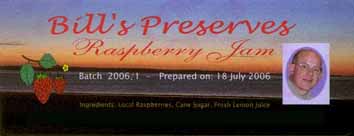
The photograph is a reduced version of the labels I printed off for today's production - the background photogaph was taken on midsummer eve this year at about 10.45pm, looking over the shore from Nairn toward the Sutors at Cromarty opposite; it was a lovely evening.
Thursday, 13 July 2006
Yet another 'political profile' thingie
Like a lot of these quizzes it is specifically designed for a US audience so some of the questions, and the options available, have small relevance in the UK. However, I have done my best and this is what it shows for me:
(thru Martin Kelly)
| Your Political Profile: |
| Overall: 65% Conservative, 35% Liberal |
| Social Issues: 50% Conservative, 50% Liberal |
| Personal Responsibility: 75% Conservative, 25% Liberal |
| Fiscal Issues: 100% Conservative, 0% Liberal |
| Ethics: 50% Conservative, 50% Liberal |
| Defense and Crime: 50% Conservative, 50% Liberal |
(thru Martin Kelly)
Circling the wagons? MPs committee to interview 'Yates of the Yard'
It sounds like this latest sinister devlopment is a political version of the best form of defence being attack! There is to be a private meeting between Deputy Assistant Commissioner of the Metropolitan Police John Yates, the man in charge of the 'cash for honours' investigations, and the House of Commons public administration committee.
Sounds as if MPs of all Parties (specially the governing one!) are becoming seriously alarmed at where the investigations into how they and their political masters fund their domination of our public life may lead. Do they think they can initimidate Yates into 'going easy' on this whole cabal of sleaze? I hope not!
Yesterday Lord Levy. Who next?
Sounds as if MPs of all Parties (specially the governing one!) are becoming seriously alarmed at where the investigations into how they and their political masters fund their domination of our public life may lead. Do they think they can initimidate Yates into 'going easy' on this whole cabal of sleaze? I hope not!
Yesterday Lord Levy. Who next?
Wednesday, 12 July 2006
Lord Levy arrested! Yes!!
A result!
Lord Levy, chief fund raiser for the Labour Party, currently the government of this country, has been arrested. It was revealed yesterday that it was Lord Levy who had requested to Sir Gulam Noon that his financial contribution to the Labour Party, prior to the 2005 General Election, be re-classified as a 'Loan' rather than a 'Donation', thus precluding it having to be declared. Sir Gulam Noon had originally declared it as a 'Donation'. As a result of that re-classification, the Peerage then being considered for Sir Gulam Noon was rejected by the Lords Appointments Committee.
Extraordinary! Who will be next?
Read more here.
Lord Levy, chief fund raiser for the Labour Party, currently the government of this country, has been arrested. It was revealed yesterday that it was Lord Levy who had requested to Sir Gulam Noon that his financial contribution to the Labour Party, prior to the 2005 General Election, be re-classified as a 'Loan' rather than a 'Donation', thus precluding it having to be declared. Sir Gulam Noon had originally declared it as a 'Donation'. As a result of that re-classification, the Peerage then being considered for Sir Gulam Noon was rejected by the Lords Appointments Committee.
Extraordinary! Who will be next?
Read more here.
Emergency debate on Extradition Act/Treaty
I have been watching the emergency debate in the House of Commons since it began and await the result of a vote to decide whether the debate should continue. More later. Almost all Members who spoke, including those on the Government back-benches, spoke opposing the position of the Government.
Result - Eyes to the right 246 - Noes to the left 4
Can you believe it?
Pretty overwhelming! This Government and its flawed policies relating to Extradition have been shown up for the nonsense they are! I will post some more detailed comments about what I saw and heard a little later.
Result - Eyes to the right 246 - Noes to the left 4
Can you believe it?
Pretty overwhelming! This Government and its flawed policies relating to Extradition have been shown up for the nonsense they are! I will post some more detailed comments about what I saw and heard a little later.
Tuesday, 11 July 2006
Bomb blasts on commuter trains in Mumbai, India
The BBC is reporting that at least six bomb blasts have struck commuter trains across Mumbai killing so far 'dozens' with many more wounded.
Too soon to know what has caused these blasts, but it sounds like terrorist attacks. I wonder who is behind them? Apparently there have been a number of bomb blasts in Mumbai in recent years.
UPDATE: (Tuesday 11JUL06 16.25 BST) Latest news on BBC reports that 'at least' 100 have been killed and 'more than' 250 injured. The attacks were apparently targetted at first class compartments on the trains. Those responsible not yet known - possibly Kashmiri militants, possibly local criminal gangs. It seems that the local police were expecting attacks.
2nd UPDATE: (Tuesday 11JUL06 16.34 BST) BBC now reporting 135 killed in blasts. Frank Gardner (BBC Security Correspondent - the one who was badly injured in Jeddah a while back and whose cameraman was killed) is speculating that there might be al-qa'ida links. Still no real news, though, about who may be responsible.
3rd UPDATE: (Tuesday 11JUL06 16.47 BST) A Mumbai blogger, India Uncut, gives his on the ground reports and links to useful sources of local help. I first started to follow this blog in the wake of the Boxing Day Tsunami 18 months ago, but haven't visited much of late - glad I still had the RSS feed on Bloglines, though!
4th UPDATE: (Tuesday 11JUL06 18.31 BST) More local blogging at Mumbaibog and Mumbai Help.
5th UPDATE: (Tuesday 11JUL06 19.33 BST) BBC says latest death toll is at least 147 and there are probably over 400 injured. Truly grim news.
6th UPDATE: (Tuesday 11JUL06 20.10 BST) The news just gets worse and worse! Latest estimate for the death toll from the BBC at 8pm - at least 170. I expect the numbers of dead and injured will escalate further as rescue efforts continue. Sigh. No more from me tonight as I have overnight guests who will be arriving shortly.
Too soon to know what has caused these blasts, but it sounds like terrorist attacks. I wonder who is behind them? Apparently there have been a number of bomb blasts in Mumbai in recent years.
UPDATE: (Tuesday 11JUL06 16.25 BST) Latest news on BBC reports that 'at least' 100 have been killed and 'more than' 250 injured. The attacks were apparently targetted at first class compartments on the trains. Those responsible not yet known - possibly Kashmiri militants, possibly local criminal gangs. It seems that the local police were expecting attacks.
2nd UPDATE: (Tuesday 11JUL06 16.34 BST) BBC now reporting 135 killed in blasts. Frank Gardner (BBC Security Correspondent - the one who was badly injured in Jeddah a while back and whose cameraman was killed) is speculating that there might be al-qa'ida links. Still no real news, though, about who may be responsible.
3rd UPDATE: (Tuesday 11JUL06 16.47 BST) A Mumbai blogger, India Uncut, gives his on the ground reports and links to useful sources of local help. I first started to follow this blog in the wake of the Boxing Day Tsunami 18 months ago, but haven't visited much of late - glad I still had the RSS feed on Bloglines, though!
4th UPDATE: (Tuesday 11JUL06 18.31 BST) More local blogging at Mumbaibog and Mumbai Help.
5th UPDATE: (Tuesday 11JUL06 19.33 BST) BBC says latest death toll is at least 147 and there are probably over 400 injured. Truly grim news.
6th UPDATE: (Tuesday 11JUL06 20.10 BST) The news just gets worse and worse! Latest estimate for the death toll from the BBC at 8pm - at least 170. I expect the numbers of dead and injured will escalate further as rescue efforts continue. Sigh. No more from me tonight as I have overnight guests who will be arriving shortly.
An economics primer with style - from the Dean of Columbia Business School
The original Sting version of 'Every Breath you Take' was good, but this is really very strong stuff from Columbia Business School's Dean Glenn Hubbard, lamenting that Ben Bernanke replaced Alan Greenspan as Chairman of the US Federal Reserve Board rather than him. And the performance is done with considerable style, too - a career awaits that man outside academe if he wants it, I would imagine:
(thru Andrew Sullivan)
(thru Andrew Sullivan)
Egypt needs to amend its homophobic policies ...
... if it is worried about publicity about this affecting its tourist industry.
The solution is not to attempt to censor films or discussions of the highly disciminatory practices of the Egyptian government and many of its people towards gays.
As I've written in this blog many times before, tourists from countries with money to spend have complete choice about where they choose to visit for their vacations. I cannot imagine me deciding any time soon to spend some of my tourism-spend in places like Egypt when there are so many other more welcoming places to visit. If the Egyptian authorities feel they are getting unhelpful publicity for policies they believe in they have only themselves to blame - and there is no question of people like me not shouting as loudly as I can to make sure as many people as possible know about it! Get used to it!
The solution is not to attempt to censor films or discussions of the highly disciminatory practices of the Egyptian government and many of its people towards gays.
As I've written in this blog many times before, tourists from countries with money to spend have complete choice about where they choose to visit for their vacations. I cannot imagine me deciding any time soon to spend some of my tourism-spend in places like Egypt when there are so many other more welcoming places to visit. If the Egyptian authorities feel they are getting unhelpful publicity for policies they believe in they have only themselves to blame - and there is no question of people like me not shouting as loudly as I can to make sure as many people as possible know about it! Get used to it!
Black gays protest homophobe AIDS concert
Extraordinary! Quite what LIFEbeat is up to escapes me! Beenie Man and TOK are two of the performers booked to take part in an AIDS-prevention benefit scheduled for July 18 in New York (another report is here). If they are allowed to take part then they should certainly be required to make statments condemning homophobia - and they should be much more explicit than the pathetic statements made by Beenie Man in the past!
Luckily British promoters have rescinded an invitation to both Beenie Man and another arch-homophobic rapper Buju Banton to take part in a concert here.
UPDATE: (Thursday 13JUL06 09.30 BST) The New York concert has now been cancelled. For an organisation said to be raising money for HIV/AIDS awareness, its protests about the negative feeling caused by the inclusion of homophobic performers sound bizarre - and hollow! If they did not appreciate that the inclusion of such performers at an HIV/AIDS awareness fund-raising event, for goodness sake(!), would be bound to cause enormous offence amongst gays - of whatever colour - then they need their heads examined!
Luckily British promoters have rescinded an invitation to both Beenie Man and another arch-homophobic rapper Buju Banton to take part in a concert here.
UPDATE: (Thursday 13JUL06 09.30 BST) The New York concert has now been cancelled. For an organisation said to be raising money for HIV/AIDS awareness, its protests about the negative feeling caused by the inclusion of homophobic performers sound bizarre - and hollow! If they did not appreciate that the inclusion of such performers at an HIV/AIDS awareness fund-raising event, for goodness sake(!), would be bound to cause enormous offence amongst gays - of whatever colour - then they need their heads examined!
Incitement to murder of gays in advance of Jerusalem Gay Pride
Leaflets offering NIS20,000 (about USD4,500) as a reward have been distributed to hundreds of homes in Jeruslaem to "anyone who will cause the death of one of the Sodom and Gamorrah people", according to this report in Ynetnews.com. A similar report is carried by The Jerusalem Post.
Pretty shocking! The only response to this kind of intimidation can be:
We're here! We're Queer! And we ain't goin' anywhere!
Get used to it!
Pretty shocking! The only response to this kind of intimidation can be:
Get used to it!
ID Card introduction may be delayed ...
... just a couple of days after denying that such a delay was likely, the Home Office is now coming clean - I'm just watching this marvellous news on BBC News24.
Keep the pressure up on the government! The aim must be for them to abandon the policy completely. Visit www.no2id.net for more information.
Keep the pressure up on the government! The aim must be for them to abandon the policy completely. Visit www.no2id.net for more information.
Gay women bankers less likely to be "out"
The Scotsman carries a report by recruitment firm The Blomfield Group that whilst diversity is increasing in the City, that does not really extend to gay people, specially women, who are generally felt to have to struggle anyway in a largely white heterosexual male environment - the findings are that they are "three times more likely than men not to disclose their sexuality". A number of high-profile lawsuits about alleged discrimination in the financial services industry is not helpful either.
Monday, 10 July 2006
National Anthems - Italy and France
To round off my posts with videos of the national anthems of teams taking part in the World Cup Football Championship in Germany, I'm including links to the national songs of the winner, Italy and the runner-up, France:
Italy - 2006Football World Cup Winners - Congratulations!
France - Runner-up - ah well, better luck next time!
France - Runner-up - ah well, better luck next time!
Don't Panic!
Home Secretary John Reid, speaking in the House of Commons a few moments ago, announced that from 1st August the 'security threat alert' will be made public and revealed that it is currently
SEVERE
- we are not going to be adopting, it seems, the colour-coding used in the US, but the five stages of the threat ladder (reduced from seven under the old confidential classification) seem otherwise very similar.
Nothing very detailed yet on the BBC News Page (other than a headline ticker tape), although this has just appeared in the past few moments, or on the Home Office or MI5 websites.
In the news report from the BBC referred to above they are still quoting from the 7-stage list, but from 1st August the 5 will be (following Dr Reid's verbal statement in the Commons):
- Low (an attack is unlikely);
- Moderate (an attack is possible but not likely);
- Substantial (an attack is a strong possibility);
- Severe (an attack is likely);
- Critical (an attack is expected imminently).
All very interesting of course, but unlikely to change much in the lives of most people. I shall go on as usual - which for me means pouring myself another glass of rather lovely Puligny-Montrachet.
- we are not going to be adopting, it seems, the colour-coding used in the US, but the five stages of the threat ladder (reduced from seven under the old confidential classification) seem otherwise very similar.
Nothing very detailed yet on the BBC News Page (other than a headline ticker tape), although this has just appeared in the past few moments, or on the Home Office or MI5 websites.
In the news report from the BBC referred to above they are still quoting from the 7-stage list, but from 1st August the 5 will be (following Dr Reid's verbal statement in the Commons):
- Low (an attack is unlikely);
- Moderate (an attack is possible but not likely);
- Substantial (an attack is a strong possibility);
- Severe (an attack is likely);
- Critical (an attack is expected imminently).
All very interesting of course, but unlikely to change much in the lives of most people. I shall go on as usual - which for me means pouring myself another glass of rather lovely Puligny-Montrachet.
ID Card policy crumbling?
It seems that, internally at least, the civil servants who will have to implement the Government's crazy ID Card policy have come to realise just how unlikely it is that the scheme can be brought into operation any time soon and certainly not with any degree of effectiveness - assuming one can even divine what ID Cards are supposed to be designed to do.
Naturally, though, the official Government propaganda apparatus (i.e. a Home Office spokesman) is unwilling to accept this, far less to tell we poor saps just what is going on.
Whilst I think it is increasingly likely that the Government will be forced to abandon most of what they are trying to foist upon us, it is still necessary to remain vigilant -
SAY NO TO ID CARDS!
Say it LOUD and CLEAR!
- visit www.no2id.net for more information.
Naturally, though, the official Government propaganda apparatus (i.e. a Home Office spokesman) is unwilling to accept this, far less to tell we poor saps just what is going on.
Whilst I think it is increasingly likely that the Government will be forced to abandon most of what they are trying to foist upon us, it is still necessary to remain vigilant -
Say it LOUD and CLEAR!
- visit www.no2id.net for more information.
New mauve/blue blog colour scheme
I've just updated my colour scheme, replacing the turquoise/beige theme with a photographic header banner, which I have been using (or most of it at any rate) for the past two or three years. That basic colour scheme was chosen because it did not have any particular association with any of the British political parties.
The new mauve/blue colour scheme is also, I think, pretty neutral in British political terms, but is designed to reflect the heathery and blue hues of the Highlands of Scotland, where I live. I've also decided to replace the photographic header banner with a purely textual image in an effort to de-clutter my template, apart from including a 'vanity shot' of my face (*). I think some more work in this area is required to give my page an even cleaner and simpler look, but there are a few basic design issues with my template (the way the left and right columns are currently arranged in a series interlinked tables, for example, even though little of this is apparent to the viewer), which I must think about before making any further changes.
What do you think of the changes so far?
(*) Although a lot of excellent blogs are effectively anonymous I have always taken the view that one should be prepared to identify oneself publicly with one's views, even though I understand that for some people this may have personal or professional repercussions. Ultimately, however, I consider all such dissimulation to be a 'cop-out' and I assess such blogs accordingly. That's just the way I look at things.
The new mauve/blue colour scheme is also, I think, pretty neutral in British political terms, but is designed to reflect the heathery and blue hues of the Highlands of Scotland, where I live. I've also decided to replace the photographic header banner with a purely textual image in an effort to de-clutter my template, apart from including a 'vanity shot' of my face (*). I think some more work in this area is required to give my page an even cleaner and simpler look, but there are a few basic design issues with my template (the way the left and right columns are currently arranged in a series interlinked tables, for example, even though little of this is apparent to the viewer), which I must think about before making any further changes.
What do you think of the changes so far?
(*) Although a lot of excellent blogs are effectively anonymous I have always taken the view that one should be prepared to identify oneself publicly with one's views, even though I understand that for some people this may have personal or professional repercussions. Ultimately, however, I consider all such dissimulation to be a 'cop-out' and I assess such blogs accordingly. That's just the way I look at things.
Sunday, 9 July 2006
George W Bush - as you've never seen him before!
'Rapper'-Bush gets it on! Start your Sunday with something, well, something 'uplifting' (kind of) ...
- it would have been quite helpful, however, if the US had agreed (over the past few years) to extradite just a few of the people who actively fomented the terrorism this country (the United Kingdom) has suffered from at the hands of the IRA and its apologists ('Bloody Sunday' has quite special connotations in this country). The ongoing scandal about the probable extradition of the 'Natwest three' to the United States, which I wrote about here, highlights just how unequal our extradition arrangements remain with 'the land of the free', specially when it comes to looking at half-way sensible ideas about how to tackle justice and terrorism under this incompetent US administration, not that our present UK government is any better.
(thru Swede and Czech)
- it would have been quite helpful, however, if the US had agreed (over the past few years) to extradite just a few of the people who actively fomented the terrorism this country (the United Kingdom) has suffered from at the hands of the IRA and its apologists ('Bloody Sunday' has quite special connotations in this country). The ongoing scandal about the probable extradition of the 'Natwest three' to the United States, which I wrote about here, highlights just how unequal our extradition arrangements remain with 'the land of the free', specially when it comes to looking at half-way sensible ideas about how to tackle justice and terrorism under this incompetent US administration, not that our present UK government is any better.
(thru Swede and Czech)
Friday, 7 July 2006
London Terrorist Outrages - 7th July 2005
 ... one year already ... My sincere condolences to all those who have lost family, friends and colleagues in the horrifying and incomprehensible acts of terrorism against innocent people in London, travelling on the London Underground and on a London bus, killing several dozen and injuring many hundreds Rest in Peace. Terrorism cannot, and must not, ever be appeased. |
There are permanent links to memorial pages for this and other recent terrorist outrages in the right-hand column under the heading 'Memorial Pages'.
Wednesday, 5 July 2006
Dictatorship Britain - the US / UK Extradition Treaty 2003
This little blog has been silent for a few days, for various reasons. One of the principal reasons, though, has been a profound depression borne of a seething anger at the seeming inaction of our Government to ensure equity in the treatment of its citizens when confronted with extradition to the United States in accordance with the terms of the Extradition Treaty 2003 (.pdf file) between the British and American Governments. The Extradition Act 2003 may be viewed here.
The US/UK Extradition Treaty 2003 has been ratified by the British government and the necessary legislation (i.e. the Extradition Act 2003 referred to above) has been passed into British domestic law to render it effective under British laws. The United States has not ratified the Treaty and, from what I have read, its ratification has been held up by the United States Senate - a link to the latest Senate record I can find on the proposed (so far as the US is concerned) Extradition Treaty with the UK is here (.pdf file) - this relates to testimony before the US Senate Committee on Foreign Relations given by Samuel L Witten, Deputy Legal Adviser, U.S. Department of State on 15th November 2005. From what I can gather, from other reports I have seen and heard, ratification has been held up by the US Senate because of lobbying by the 'Irish Lobby' who fear that it would affect persons who might be suspected, by the British Government, of acts relating to terrorist activities by those seeking the reunification of Ireland by separating Northern Ireland from the rest of the UK (in order words, aiding and abetting the IRA).
So much for formal aspects of this issue. I have for some months, though, been watching with great interest the progress of the efforts by three British citizens, former employees of National Westminster Bank plc (now part of the Royal Bank of Scotland), who are subject to extradition warrants from the United States for alleged fraud in connection with the spectacular financial collapse of US energy giant Enron.
Like many others, I have for a long time been extremely curious as to why The Royal Bank of Scotland has apparently taken no action of any kind against the 'Natwest three', as any crime which may or may not have been committed, seemingly by general agreement, solely involved their former employers National Westminster Bank plc and to have taken place, if it took place, solely in the United Kingdom. Indeed I came across this very interesting post by Houston-based attorney Tom Kirkendall in which he echoes the queries of British legal commentators who are now "openly questioning why the British government is giving in so easily to a U.S. government extradition request relating to reputable U.K. businessmen, particularly in regard to an extradition that would result in a prosecution of those U.K. citizens in Houston's anti-Enron environment for alleged crimes that the U.K. government has declined to prosecute?"; he concludes his article by writing: "That's a pretty darn good question.".
The speculation I have been reading for some weeks is that the motive for seeking their extradition is to offer them some sort of 'plea-bagain' to enable further prosecutions to be brought against others allegedly associated with the Enron fiasco. Who knows what the real reason is.
My curiosity at the seeming lack of action by The Royal Bank of Scotland was, to some extent, answered by a very interesting article which appeared in yesterday's Daily Telegraph, in their 'Business' Section, written by Katherine Griffiths - you can read it here, although I quote a few relevant parts of it:
It certainly makes one wonder! In the same 'Business' Section of the Dail Telegraph yesterday, Damian Reece wrote:
In today's 'Business' Section of the Dail Telegraph, Jeff Randall writes:
That last bit, "the fate of the NatWest Three could be the least of RBS's worries", seems very likely to be the whole sordid crux of this apparent inaction! There is also another very interesting article in today's Daily Telegraph (on the front page of the print edition), by Political Editor George Jones which you can read here, neatly summarised in this brief extract:
- this was brutally confirmed in today's Prime Minister's Questions when Tony Blair responded to a question from LibDem Leader Menzies Campbell MP by indicating that there IS reciprocity between the UK and the US in the Extradition Treaty and that it is 'merely' giving the US the same protection as the UK and many other countries already have in their extradition treaties. I am not a barrister, whereas both Menzies Campbell and Tony Blair are, but they seem to disagree fundamentally about whether there is such reciprocity in the operation of the Extradition Treaty by the UK and the US - and EVERY comment I have ever read about this agrees with Menzies Campbell on this basic point! One really does wonder whether Tony Blair has lied flagrantly to the House of Commons or whether EVERYONE ELSE has got it wrong! At least Blair has now had this somewhat grudging pledge forced out of him!
Also in today's 'Business' Section of the Dail Telegraph, Damian Reece writes:
If you would like to add your own voice to this petition (I have done so already), please click here. I urge you to do so.
The US/UK Extradition Treaty 2003 has been ratified by the British government and the necessary legislation (i.e. the Extradition Act 2003 referred to above) has been passed into British domestic law to render it effective under British laws. The United States has not ratified the Treaty and, from what I have read, its ratification has been held up by the United States Senate - a link to the latest Senate record I can find on the proposed (so far as the US is concerned) Extradition Treaty with the UK is here (.pdf file) - this relates to testimony before the US Senate Committee on Foreign Relations given by Samuel L Witten, Deputy Legal Adviser, U.S. Department of State on 15th November 2005. From what I can gather, from other reports I have seen and heard, ratification has been held up by the US Senate because of lobbying by the 'Irish Lobby' who fear that it would affect persons who might be suspected, by the British Government, of acts relating to terrorist activities by those seeking the reunification of Ireland by separating Northern Ireland from the rest of the UK (in order words, aiding and abetting the IRA).
So much for formal aspects of this issue. I have for some months, though, been watching with great interest the progress of the efforts by three British citizens, former employees of National Westminster Bank plc (now part of the Royal Bank of Scotland), who are subject to extradition warrants from the United States for alleged fraud in connection with the spectacular financial collapse of US energy giant Enron.
Like many others, I have for a long time been extremely curious as to why The Royal Bank of Scotland has apparently taken no action of any kind against the 'Natwest three', as any crime which may or may not have been committed, seemingly by general agreement, solely involved their former employers National Westminster Bank plc and to have taken place, if it took place, solely in the United Kingdom. Indeed I came across this very interesting post by Houston-based attorney Tom Kirkendall in which he echoes the queries of British legal commentators who are now "openly questioning why the British government is giving in so easily to a U.S. government extradition request relating to reputable U.K. businessmen, particularly in regard to an extradition that would result in a prosecution of those U.K. citizens in Houston's anti-Enron environment for alleged crimes that the U.K. government has declined to prosecute?"; he concludes his article by writing: "That's a pretty darn good question.".
The speculation I have been reading for some weeks is that the motive for seeking their extradition is to offer them some sort of 'plea-bagain' to enable further prosecutions to be brought against others allegedly associated with the Enron fiasco. Who knows what the real reason is.
My curiosity at the seeming lack of action by The Royal Bank of Scotland was, to some extent, answered by a very interesting article which appeared in yesterday's Daily Telegraph, in their 'Business' Section, written by Katherine Griffiths - you can read it here, although I quote a few relevant parts of it:
RBS last year settled one case over Enron brought by its bankruptcy administrators, paying $20m (£11m). It has filed a motion to try to get the Newby case dismissed and has said the case has no merit. A ruling by the Houston judge, Melinda Harmon, is awaited. Ms Harmon threw out a similar motion by Barclays and the Newby litigation against that bank is due to start in October. While RBS has been tight-lipped over most aspects of the litigation surrounding Enron, it is understood to have said one thing in private to the NatWest Three which could be significant. That was to tell them that in addition to the fact that it was difficult to engage with them due to the ongoing US case against them, it would also not collaborate following advice from its US lawyers. That may be an oblique reference to RBS's own difficulties. The bank warns shareholders in its annual report that it faces litigation and says it has supplied the SEC and Department of Justice with documents in response to their requests. Perhaps in the mind of Sir Fred Goodwin, chief executive of RBS, is what happened to KPMG. The accounting giant agreed with the Department of Justice and SEC to pay $456m to avoid being prosecuted as a firm for selling allegedly illegal tax shelters. The deal is widely seen as having avoided a similar situation to Arthur Andersen, which collapsed after it was criminally indicted for its involvement with Enron. As part of the agreement with the US authorities, KPMG is not helping the defence of the individual partners indicted over the tax shelters. They must fight their case alone. |
It certainly makes one wonder! In the same 'Business' Section of the Dail Telegraph yesterday, Damian Reece wrote:
Who'll help us when the US marshals hit town? It was gratifying to hear Richard Lambert, the new director general of the CBI, lend his voice yesterday to those criticising the Government for its supine attitude towards America's extradition demands. He joined his alma mater, the Financial Times, who last Wednesday told the UK Government that it should suspend the current extradition treaty with the US. Such support for the aim of our long-running Fair Trials for Business campaign may be too little too late but at least it adds fuel to the fire. I'm delighted Lambert has decided to follow his vocal predecessor, Sir Digby Jones, in casting serious doubt over the Government's handling of extradition procedures with the US. (please click on the link above to see the full article.) |
In today's 'Business' Section of the Dail Telegraph, Jeff Randall writes:
The fog lifts over RBS's inaction on NatWest Three So now we know. We have an answer to the question which, for many months, has been baffling British business leaders. Why won't Royal Bank of Scotland, owner of NatWest, involve itself directly in the case of its former executives who face extradition to the United States on fraud charges? All the bank needs do is to start legal action here in Britain against the NatWest Three - David Bermingham, Giles Derby and Gary Mulgrew - for their extradition to be halted immediately. But, so far, RBS has mysteriously refused. What's behind this apparent abnegation of responsibility? Why let American prosecutors grab the controls of what should be an all-British legal matter? It seems not to make sense. For if RBS believes that the trio are innocent, surely the bank has a duty to protect them. If, on the other hand, RBS is convinced of their guilt, why not take them to court here? After all, it was in Britain where the alleged crime was committed. All the witnesses are here; so too is the evidence. Allegations that the NatWest Three were swindlers, which they deny, emerged after a dragnet by American authorities into the £40bn collapse of Enron, the US energy company. There is, however, no claim that the British bankers defrauded anyone other than NatWest. So why would RBS sit on its hands and, by default, allow its ex-employees to endure a Texas jail for two years while awaiting trial? It's known as the Lone Star state, but the prisons there are unmistakeably no-star. Stripped of easy access to family, friends and legal support, bankrupted by the horrendous cost of US litigation, Bermingham, Derby and Mulgrew could not possibly defend themselves properly. Banged up in Houston, they really would have a problem. Why then put them through it? Not even his worst enemies suggest that RBS's chief executive, Sir Fred Goodwin, is motivated by either indifference or spite. So what's his reason for doing nothing, thereby letting the NatWest Three stew in the juice of their own fear and frustration? Questions, questions, questions. Now, at last, we have some answers. Sterling work by my colleague, Katherine Griffiths, in yesterday's Daily Telegraph, revealed that, when it comes to the fall-out from Enron, the fate of the NatWest Three could be the least of RBS's worries. (please click on the link above to see the full article.) |
That last bit, "the fate of the NatWest Three could be the least of RBS's worries", seems very likely to be the whole sordid crux of this apparent inaction! There is also another very interesting article in today's Daily Telegraph (on the front page of the print edition), by Political Editor George Jones which you can read here, neatly summarised in this brief extract:
"Downing Street indicated that it was washing its hands of the three, even though Washington has not ratified the treaty allowing similar treatment for Americans." |
- this was brutally confirmed in today's Prime Minister's Questions when Tony Blair responded to a question from LibDem Leader Menzies Campbell MP by indicating that there IS reciprocity between the UK and the US in the Extradition Treaty and that it is 'merely' giving the US the same protection as the UK and many other countries already have in their extradition treaties. I am not a barrister, whereas both Menzies Campbell and Tony Blair are, but they seem to disagree fundamentally about whether there is such reciprocity in the operation of the Extradition Treaty by the UK and the US - and EVERY comment I have ever read about this agrees with Menzies Campbell on this basic point! One really does wonder whether Tony Blair has lied flagrantly to the House of Commons or whether EVERYONE ELSE has got it wrong! At least Blair has now had this somewhat grudging pledge forced out of him!
Also in today's 'Business' Section of the Dail Telegraph, Damian Reece writes:
Join your voices to the protests at this unjust treaty Today is a call to action. Readers of The Daily Telegraph are being invited to add their names to an open letter to John Reid, the Home Secretary, protesting against our extradition treaty with the US which, as we have pointed out many times, is an affront to British justice. The easiest way to do this is to go online to the Telegraph website and add your name that way. If you prefer, you can write to me expressing your support for our campaign and I will send on your letters to the Home Office. Please mark your letters "Extradition". Readers, from ordinary folk to our most illustrious business leaders, are united in their opposition to what is an obvious flaw in our legislation, that could and should be amended. Of course Britain's relationship with America is special but that does not mean it has to be unequal. Yes, the greater economic and military power lies on the other side of the Atlantic but our freedom cannot be bargained away in a badly drafted and unfair treaty that we have signed but the US has not. It is crucial you add your support to this urgent matter. Do not delay. |
If you would like to add your own voice to this petition (I have done so already), please click here. I urge you to do so.
Sunday, 2 July 2006
Three gay couples 'wed' in Czech Republic
The first three gay couples to register their partnerships have celebrated their 'weddings' reports CeskeNoviny.cz. The first ever such partnership in the Czech Republic took place between Josef and Karel ('Pepa') in Ostrava, who said: "It was wonderful. We've saved some money together. Now we are sure of not losing it if any of us passed away". On the other hand they have stated their opposition to same-sex couples raising children - they think this is best undertaken by a child's mother. The new law took effect on 1 July 2006. News24.com writes: "An opinion poll this year showed 62% of Czechs in favour of same-sex marriages or registered partnerships. Previous proposals for registered partnerships had been rejected in four separate votes in parliament. The last, in February, was defeated by a single vote."
The Czech Republic is the first country in central Europe to permit gay partnerships. Well done!
The Czech Republic is the first country in central Europe to permit gay partnerships. Well done!
EuroPride London is a colourful success
An estimated 40,000 people took part in Saturday's colourful EuroPride celebration in London. Pretty good, I think, considering that there was a football match involving England in Germany to day as well - I'm sure many would have stayed near a television monitor to prepare for that.
Two gay Royal Canadian Mounties wed in uniform
Two gay Royal Canadian Mounties wed on Friday in uniform in Yarmouth, Nova Scotia. In its article headlined "Residents of Yarmouth, N.S., nonplussed by marriage of gay Mounties" on the subject, Canada.com reports that not all residents were, however, in any way 'put out' - "Ronnie Devine doesn't know what the fuss is about. While cleaning his lobster boat Friday, the fisherman said he doesn't understand why people are still talking about the marriage of two gay Mounties in this bustling fishing port.":
Speaking of the couple, nicknamed locally as the 'Brokeback Mounties' (quite amusing, I think!), one elderly man is quoted as saying:
Seems like a pragmatic attitude.
I quote one other segment from the Canada.com article: "Prime Minister Stephen Harper has said he will hold the vote to determine whether there is an appetite to revisit legislation giving homosexuals the right to marry. In a bid to avoid controversy, Harper recently muzzled his MPs, ordering them not to comment on the marriage of the two Mounties."
- from what I can gather he would prefer to disallow such unions, but probably realises that it is such a non-issue to most Canadians that he best keep his outdated views to himself.
See a pre-wedding photograph of the happy couple here (Courtesy The Hamilton Spectator).
Congratulations to the happy pair!
"It doesn't bother me one bit. As long as they're doing their jobs properly, I couldn't care less about it." |
Speaking of the couple, nicknamed locally as the 'Brokeback Mounties' (quite amusing, I think!), one elderly man is quoted as saying:
"It's not really for me, but that's their business." |
Seems like a pragmatic attitude.
I quote one other segment from the Canada.com article: "Prime Minister Stephen Harper has said he will hold the vote to determine whether there is an appetite to revisit legislation giving homosexuals the right to marry. In a bid to avoid controversy, Harper recently muzzled his MPs, ordering them not to comment on the marriage of the two Mounties."
- from what I can gather he would prefer to disallow such unions, but probably realises that it is such a non-issue to most Canadians that he best keep his outdated views to himself.
See a pre-wedding photograph of the happy couple here (Courtesy The Hamilton Spectator).
Congratulations to the happy pair!
US Episcopal Church nominates another gay bisahop for election
The Diocese of Newark has nominated a gay man in its list of candidates for election as Bishop. The Very Rev. Canon Michael Barlowe is one of four candidates nominated. The move comes just a day after the release of the Archbishop of Canterbury’s statement on the Communion’s future.
Let's face it, there is little the rest of the Anglican Communion can do to thwart the US Episcopal Church if it is determined to go ahead. Excellent news!
Let's face it, there is little the rest of the Anglican Communion can do to thwart the US Episcopal Church if it is determined to go ahead. Excellent news!
Saturday, 1 July 2006
National Anthem – Canada
What is the definition of a Canadian? Well, it is often said that it is a North American who is not an American (i.e. not a citizen of the United States). If I were to pick a country to go and live in and become a citizen of my instinctive choices would be quite limited, but certainly Canada would be very near the top of that list - except for one pretty important detail, the climate; I don't like severe cold. Canada became a self-governing dominion within the British Empire in 1867, has had legislative sovereignty since 1931, but surprisingly only repatriated its constitution in 1982, by an Act of the British Parliament passed at Canada's request. It is the second-largest country in the world after Russia. Canada does not have a team in the Football World Cup. Although it continues to recognise Queen Elizabeth II as Head of State and uses God Save the Queen when She is in the country, it has its own national anthem - O Canada! - as well:
National Anthem - Czech Republic
The Czech Republic (officially called Czechia) came into existence only in 1993 when Czechoslovakia separated peacefully into two separate countries now known as the Czech Republic and Slovakia. Czechoslovakia, as a political entity, also had a very recent origin having come into being in 1918 as part of the break-up of the Habsburg Empire which, until the end of the First World War, was the main power in central Europe. The Czech Republic, which became a member of the European Union in 2004, has a team in the Football World Cup and this is its national anthem:
Unofficial 'National Anthem' - Wales
Wales is a 'principality' of England, a status it has had since the latter part of the 13th century and is as result a constituent part of the United Kingdom and its official national anthem is therefore God Save the Queen. Wales does not have a team in the Football World Cup, but its unofficial national song - Land of our Fathers - is a stirring tune and brings goosebumps to the backs of many people, including me, specially when sung by the spectators in the stadium in Cardiff before a rugby match:
National Anthem - Portugal
Portugal is in fact one of the UK's (or more specifically England's, long before the UK existed) oldest and closest allies and there have always been friendly relations between the two countries. Today, however, England and Portugal played each other in the Football World Cup in Germany and Portugal triumphed in the 'extra time' penalty shoot-out, so England are out of the competition. Most of Portugal and parts of present-day Spain were included in the ancient Roman province of Lusitania, a name which even in modern times has been associated with Portugal. Here is the national anthem of Portugal:
Cricket on the Links at Nairn with the shore and harbour beyond
Today it is pleasantly warm in Nairn, with only a very light breeze from the south - an ideal afternoon to play cricket as it is not too hot. The photographs are of the view from my windows and were taken about three hours ago, just before lunch.
Cricket at Nairn Links - 1st July 2006 Nairn v. Fochabers  The shore and harbour in the distance. 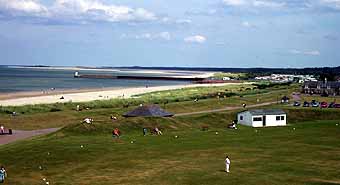 Please click here to see larger images |
Dictatorship Britain - more curtailment of freedom of expression
A trader at the Royal Norfolk Show has been punished with a fixed fine penalty of GBP80- for selling T-shirts with a logo which is considered rude about our 'glorious leader' Tony Blair, on the grounds that it might cause alarm or even distress. Gawd, give me strength!
There are a number of other aspects of 'Dictatorship Britain' that I have been planning to write about for a few days, but this relatively minor incident is symptomatic of a real cancer creeping into traditional British notions of liberty; a citizen can no longer say freely what (s)he thinks about our political Leaders, because their paid agents (the police, which we taxpayers and citizens actually pay for) will no longer let us.
So I will risk the full punishment of the law from the dictatorial clique that now rules our lives:
the government, and particularly senior Ministers including the Prime Minister, are all JERKS!
Quite obviously much more serious activities such as those of an elderly woman near Littlehampton, West Sussex cannot be tolerated and deserve punishment.
There are a number of other aspects of 'Dictatorship Britain' that I have been planning to write about for a few days, but this relatively minor incident is symptomatic of a real cancer creeping into traditional British notions of liberty; a citizen can no longer say freely what (s)he thinks about our political Leaders, because their paid agents (the police, which we taxpayers and citizens actually pay for) will no longer let us.
So I will risk the full punishment of the law from the dictatorial clique that now rules our lives:
Quite obviously much more serious activities such as those of an elderly woman near Littlehampton, West Sussex cannot be tolerated and deserve punishment.
Champagne stolen from Wimbledon
300 boxes (i.e. 1,800 bottles) of Lanson champagne, normally sold for GBP50- a bottle at the tennis tournament, have been stolen by imposters posing as contracters. My take on this? - well I wonder whether weddings taking place over the south east of England in the next few weeks, specially those where outside 'wedding planners' are involved, may end up as being the final destination of this 'bubbly'. Lanson is not a bad champagne, of course, but it is certainly not my favourite - let's hope the same fate doesn't befall the strawberries and cream, now that would be a disaster!
Nairn shore - Friday 30th June 2006 at 11.47 p.m.
I took this photograph down at the shore (about 70 metres from here) at 11.47p.m. on Friday 30th June 2006 - in other words, about a half hour ago. The view is over the Cromarty Firth, looking in the general direction of Ardersier with a crescent moon. It is a beautiful calm, still evening, still relatively mild. The photograph was taken at an exposure of two seconds.
I love the north of Scotland at this time of year!
Nairn shore - 30th June 2006 11.47 p.m. Looking toward Ardersier over the Cromarty Firth  Please click here to see a larger image |
I love the north of Scotland at this time of year!
Subscribe to:
Posts (Atom)